BrandSync AI
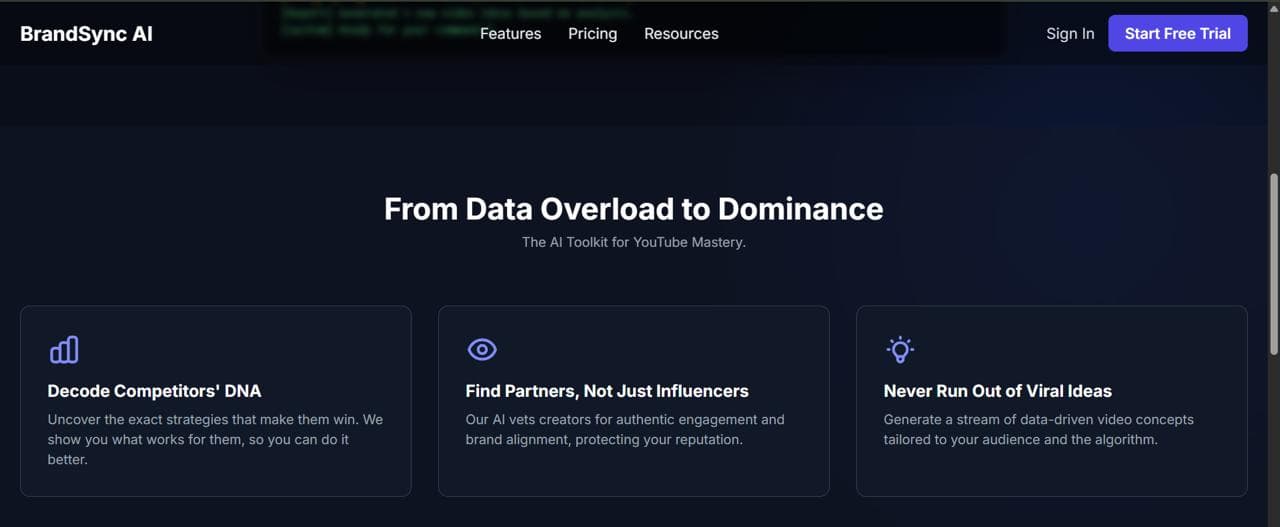
PERN-stack SaaS platform that automates 90% of an influencer-marketing agency's workflow. Picks influencers, transcribes their content, screens for brand safety, and generates video ideas — in 15 minutes instead of 10 hours.
The problem we were hired to solve.
Marketer pulls 20 channels into a sheet, eyeballs view counts, opens five videos manually, skims the comments, makes a gut call. Brand-safety check = 'I scrolled their last 10 uploads, they seem fine'. One skipped check, one viral toxic moment, six-figure brand crisis.
Marketer types a brief. Platform returns a ranked influencer list with sentiment + topic + safety scores. GPT-4 throws out 20 video-idea pitches grounded in the channel's actual trending themes. Slack pings on every new brand mention. Reports auto-generate weekly. The marketer's job is now decisions, not data assembly.
Context
Agencies were burning YouTube-ads budgets because deep analytics didn't exist in any single tool. Influencer picks were intuition calls, competitor analysis lived in spreadsheets, and brand-safety checks ate hours of manual review on every contract. The work was high-cost, low-leverage, and skill-dependent — exactly the work AI eats.
Approach
PERN-stack SaaS. React + Tailwind dashboards on top of an Express API and Postgres for analytics + financial data. Whisper API transcribes every video the agency is considering; comment-sentiment runs through Google Cloud NLP; topics get clustered so the team sees what the audience actually engages with, not just headline metrics. GPT-4 ingests the trend-clusters and generates video-idea pitches grounded in current audience taste. A Brand Safety pipeline scans each influencer for toxic content patterns and view-fraud signals before a contract is signed. BullMQ on Redis runs the YouTube-API parsing and video-processing queues so the agency can analyse twenty influencers in parallel. Slack + Telegram alerts fire on new brand mentions and Stripe handles agency-tier subscriptions with usage-based add-ons.
How this project was actually made.
Every project leaves a paper trail. Figma comments, Notion specs, GitHub history, Vercel deploy logs, Telegram threads, first-week analytics. Numbers below are real and available on request under NDA.
◆ Screenshots of any artifact available on request. Confidential details redacted.
Key features
- ◆Whisper-API video transcription + comment-sentiment + topic clustering for real audience read
- ◆GPT-4 video-idea generator anchored on trend-clusters from the analysis pipeline
- ◆Brand Safety scan — toxic content + view-fraud detection before any influencer contract is signed
- ◆Slack + Telegram alerts on new brand mentions, automated weekly client reports
- ◆BullMQ on Redis runs the YouTube-API parsing and video-processing queues at scale
- ◆Stripe-driven subscription billing for the agency tier with usage-based add-ons
Results
Influencer-pick time collapsed from 10 hours to 15 minutes. ROI on placed campaigns rose because picks were data-grounded instead of intuition-grounded. Zero brand-safety incidents on contracts that went through the pipeline — a reputational risk the manual workflow couldn't reliably catch.
Tech stack
What the client said.
We were doing this work in spreadsheets. Hours per influencer, intuition-driven, no real safety net. BrandSync turned the picking phase into a 15-minute task and we caught two brand-safety risks in the first month that the manual flow would have missed. ROI on placed campaigns is up.